Implications for Yemen’s prisoner exchange
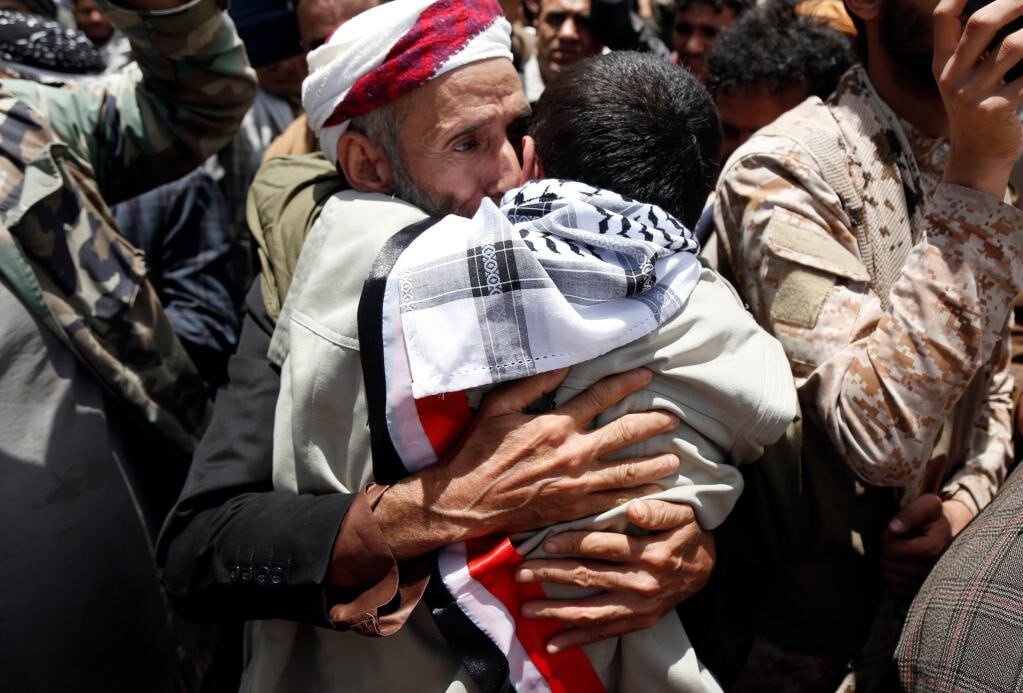
BEIRUT—A historic breakthrough has emerged in Yemen’s humanitarian landscape with the signing of an agreement to release 1,700 prisoners from the army and popular committees in exchange for 1,200 detainees from the opposite side, including seven Saudis and 23 Sudanese.
This development goes beyond a mere humanitarian gesture; it represents a strategic and political milestone, opening a pathway for broader progress on long-standing issues that have weighed heavily on Yemen for years.
Mohammed Abdul Salam, head of the Yemeni negotiating delegation, welcomed the agreement, expressing gratitude to the Sultanate of Oman for its pivotal role in facilitating the talks, mediating disputes, and ensuring a constructive outcome.
According to the UN Secretary-General’s envoy to Yemen, the negotiations spanned 11 days in Oman, culminating in a new phase of detainee releases that involve all parties.
This step is widely regarded as both positive and significant, with the potential to alleviate the suffering of prisoners and their families across Yemen.
It underscores the importance of building on this momentum to achieve further humanitarian progress.
Oman emphasized the spirit of cooperation that prevailed during the negotiations, which proved instrumental in reaching the agreement.
The talks provide a framework for addressing remaining humanitarian and political challenges, setting the stage for possible future steps in stabilizing the country.
Since the last UN-supervised exchange in April 2023, progress on Yemen’s humanitarian file had largely stalled.
External pressures—particularly from the United States on Saudi Arabia—had sought to delay implementation, in response to Yemen’s steadfast support for Gaza during the “Al-Aqsa Flood” battle.
Although airstrikes by the Saudi-UAE coalition largely ceased in 2022, logistical and economic blockades, the closure of airports—especially Sana’a International Airport—and the inability to secure prisoner releases had left the humanitarian situation stagnant.
Yet this prisoner release is not merely a humanitarian measure; it is the natural outcome of a deterrence equation established by the steadfastness of the Yemeni people.
Each detainee released serves as living proof of the failure of coercive policies and the enduring power of the oppressed against instruments of tyranny.
The agreement, executed under Omani oversight and Saudi guarantees, also includes the recovery of bodies from all fronts and the inspection of prisons post-exchange to ensure no detainees remain unaccounted for.
Civilians, including fishermen and politically detained citizens, are encompassed in the deal, demonstrating a comprehensive humanitarian approach.
This milestone highlights the effectiveness of principled resistance, the importance of regional mediation, and the potential for incremental steps to pave the way for sustainable solutions in Yemen’s protracted conflict.
If reinforced with further steps—such as opening airports, easing blockades, and providing necessary compensations—this agreement could signal the start of a broader stabilization process.
While challenges remain, the deal represents a cautious yet meaningful signal that dialogue, persistence, and adherence to humanitarian principles can achieve tangible results even amidst prolonged conflict.
Leave a Comment